
Leak detection London
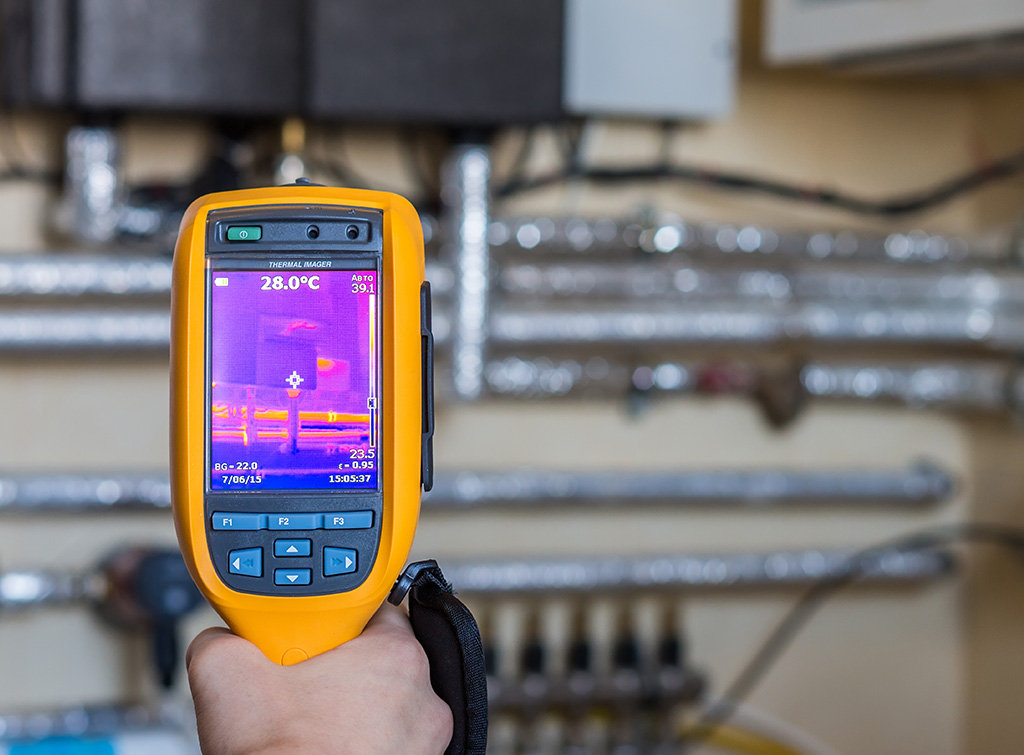
Leaks behind walls or underground are hard to find. Our leak detection specialist uses thermal imaging, acoustic and tracer gas equipment to locate and pinpoint any leak. Guaranteed.
Price guidefrom £650ex VAT





What we do
Tell us about the job so we can check the scope and the next step.
- Fixed-price survey, home insurance approved
- Guaranteed to find the leak, or your money back
- Non-intrusive: thermal imaging, acoustic and tracer gas
- Full written report for your insurer
- Quote for the repair once the leak is found
Leak detection in London
A trace and access survey is needed when there is evidence of a hidden leak that cannot be located by conventional methods: unexplained damp patches, mould or peeling paint, a sudden rise in water bills, persistent low water pressure, the sound of running water when nothing is on, or unexplained puddles.
"Trace and access" is a standard cover in most home insurance policies. It usually covers the cost of finding the source of a leak, making the area accessible so it can be repaired, and repairing damage caused by the search. It does not cover repairing the leak itself. Check your policy to confirm your cover.
To claim: contact your insurer before any work and tell them about the leak. Send them our insurance-approved quote. Once approved, we attend, carry out the survey and provide a comprehensive report pinpointing the leak. You pass the report to your insurer, who reimburses your costs. We can then quote for the repair and for making good.
When a hidden leak needs investigating
A damp patch, unexplained water use or a drop in pressure can point to a leak, but none of these signs identifies its location on its own. Water can travel along a joist, pipe or floor before it appears on a ceiling or wall. We start by asking when the problem began, which rooms are affected and whether it changes when water or heating is used.
If water is escaping now, isolate the supply at a safe, accessible valve and keep clear of wet electrical fittings. A visible leaking joint may need a plumber rather than a hidden-leak survey. Tell us about any active flooding, neighbouring property affected or suspected drainage problem so we can assess the right first visit instead of assuming specialist detection is needed.
Choosing a method for the suspected source
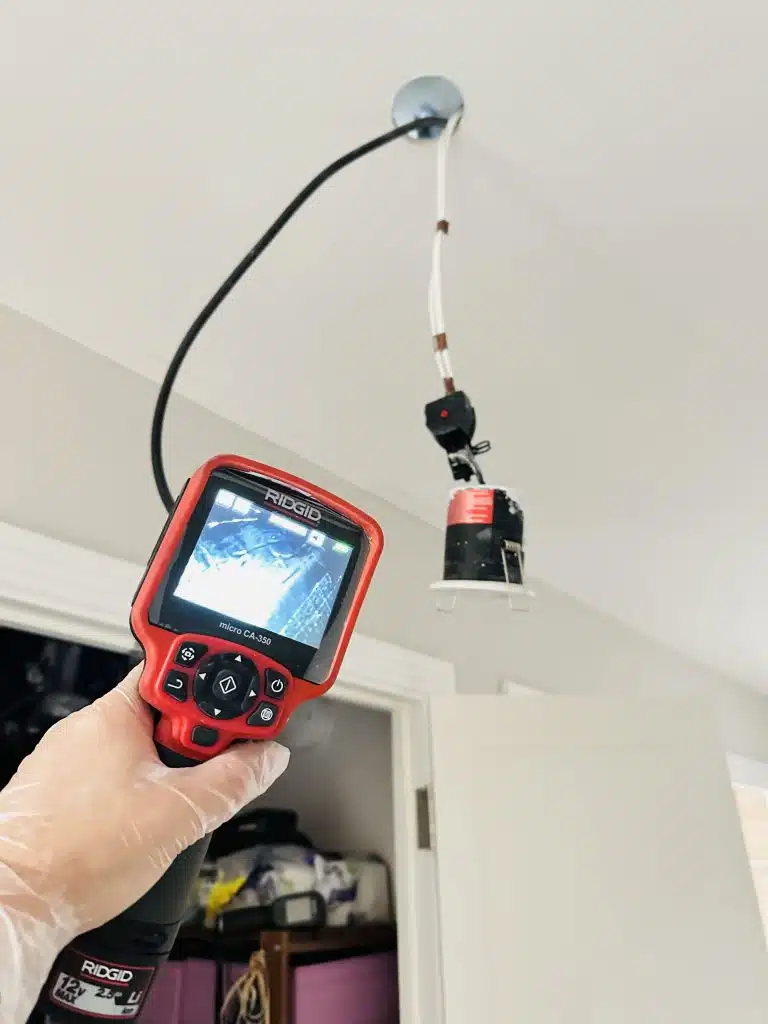
Thermal imaging records surface temperature differences and can help follow heating pipework or a moisture pattern where there is enough contrast. Acoustic equipment listens for water escaping under pressure, especially on accessible supply runs. Tracer gas can test an isolated pipe section where other signals are weak. These are different tests, not three interchangeable ways of looking through a wall.
The survey approach depends on the pipe type, access, pressure, floor construction and evidence already available. We may check fixtures, valves and meter readings before using specialist equipment. A camera image or a sound at one point is a clue to assess alongside other findings; it is not proof of the exact fault or permission to open up a finished surface without discussing the next step.
From findings to a repair decision
We explain what was tested, where the evidence points and what remains uncertain. Where a likely source can be narrowed down, the next step may be a targeted access point, a plumbing repair or a further test. Concealed pipe routes, multiple leaks and inaccessible areas can limit what a non-destructive survey establishes; we will not promise that every leak can be found on one visit.
Finding a source and fixing it are separate scopes. Once the cause is clearer, we can discuss a repair quote and any making-good work that needs another trade. Keep photographs of the affected area and avoid covering it before the cause is addressed and the materials have had time to dry.
Preparing for the visit and your insurer
Send photographs of the staining, the affected rooms and any visible pipework, plus a short history of when the symptoms appear. If you have a water meter, note whether it moves when all taps and appliances are off, but do not dismantle fittings to investigate. Access to the stopcock, boiler, cylinder and relevant rooms may help the survey.
If you plan to claim under a buildings policy, contact your insurer before agreeing to work and ask what evidence and authorisation it needs. Trace-and-access cover, exclusions, excesses and payment arrangements vary by policy. We can discuss the findings and available documentation for your claim, but an insurer decides what it will accept or reimburse.
Leak detection prices
Prices exclude VAT.
Domestic Leak Detection Survey
£650
Book
Flat roof and commercial surveys are quoted per property.
Frequently asked questions
Are underground pipes covered by home insurance?
Most buildings policies cover underground pipes, drains, cables and tanks on your private land that you are legally responsible for. Damage from wear and tear is usually excluded.
What does the survey include?
Our specialist attends with all equipment, tests the property with thermal imaging, acoustic and tracer gas methods as needed, and provides a written report for your insurer.
What if you cannot find the leak?
The survey is guaranteed: if we cannot find the leak, you get your money back.
Does a damp ceiling tell you where the pipe is leaking?
Not necessarily. Water can travel before it becomes visible. We consider the room above, nearby services and the pattern of moisture before selecting a test or an access point.
Will the survey damage walls or floors?
We normally start with inspection and suitable non-destructive tests. If opening a surface is needed to confirm or repair a fault, we explain the proposed location and scope first.
Do you use every detection method on every visit?
No. Thermal, acoustic and tracer-gas tests answer different questions. The suspected system, access and site conditions determine which are useful.
Can you guarantee you will find the leak?
A survey may narrow the likely source without proving an exact point, especially where access or test conditions are limited. We explain the findings and any sensible next test rather than promise a result in every case.
Will my insurer pay for leak detection?
Check your policy and contact your insurer before instructing work. Cover and approval are decided by the insurer; a survey or report does not itself guarantee reimbursement.
Areas we cover
Ready to book?
Send us the job details for a quote or call to discuss the next step.